Eastern State Penitenriary Walls
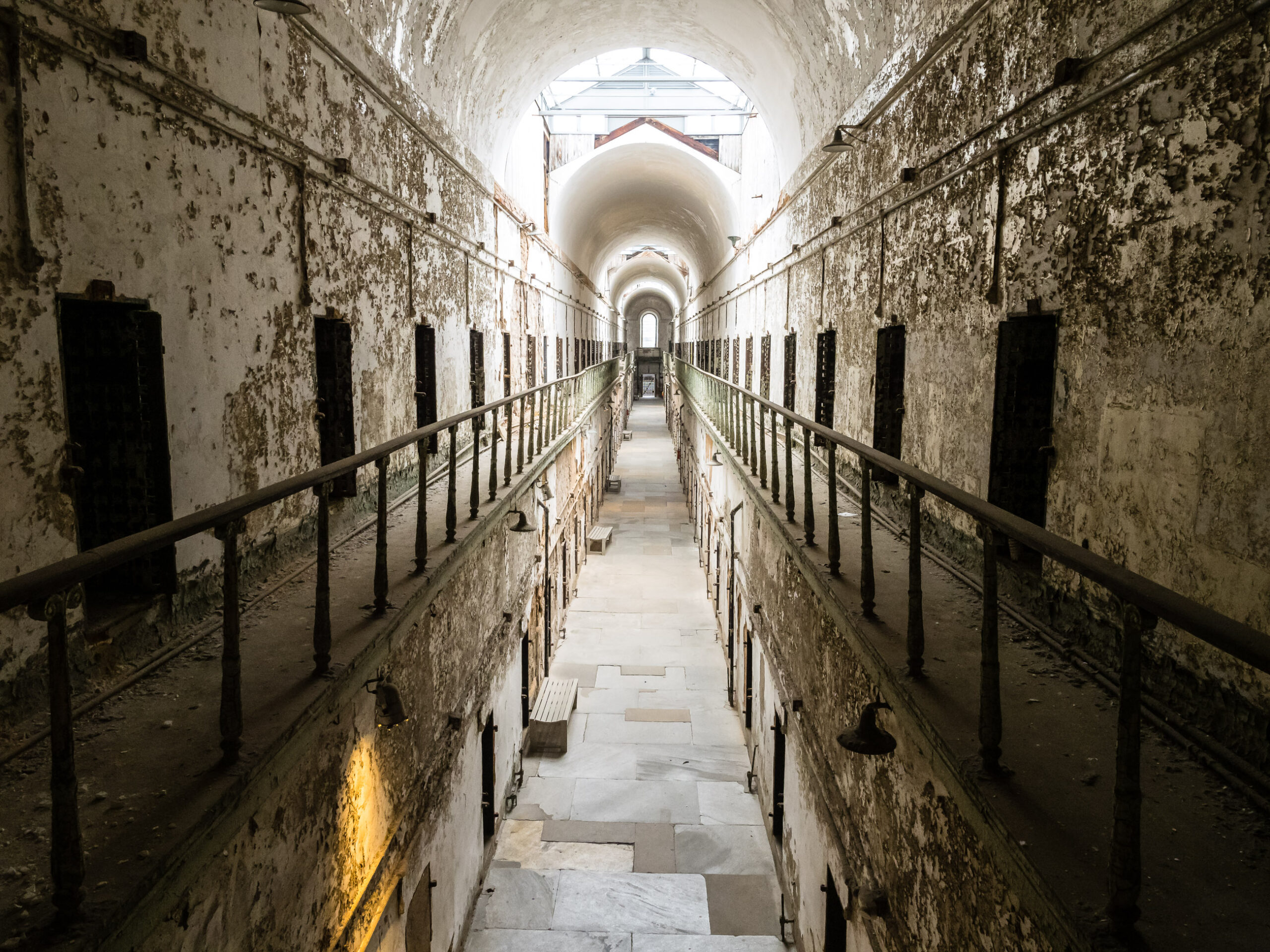
Eastern State Penitentiary was a Pennsylvanian state correction facility that operated from 1829 until 1971. It was designated a National Historical Landmark in 1965. Today visitors can tour it as a museum.
Originally intended to be a true penitentiary in which inmates were confined solitarily as a means to rehabilitation. However due to the cost and logistics of maintaining single-inmate cells, that system was largely deprecated by the 1870s and completely abandoned by 1913.
ESP was designed as a hub-and-spoke facility with all cellblocks leading to a central “surveillance hub.” When it opened, it was designed to house 256 inmates, but at its peak in the early 20th century, there about 1,700 inmates. It was closed in 1971.

Inside the Walls of Eastern State Penitentiary
Eastern State Penitentiary was a Pennsylvanian state correction facility that operated from 1829 until 1971. It was designated a National Historical Landmark in 1965. Today visitors can tour it as a museum.
Originally intended to be a true penitentiary in which inmates were confined solitarily as a means to rehabilitation. However due to the cost and logistics of maintaining single-inmate cells, that system was largely deprecated by the 1870s and completely abandoned by 1913.
ESP was designed as a hub-and-spoke facility with all cellblocks leading to a central “surveillance hub.” When it opened, it was designed to house 256 inmates, but at its peak in the early 20th century, there about 1,700 inmates. It was closed in 1971.

Entrance to Cellblock 1
Eastern State Penitentiary was a Pennsylvanian state correction facility that operated from 1829 until 1971. It was designated a National Historical Landmark in 1965. Today visitors can tour it as a museum.
Originally intended to be a true penitentiary in which inmates were confined solitarily as a means to rehabilitation. However due to the cost and logistics of maintaining single-inmate cells, that system was largely deprecated by the 1870s and completely abandoned by 1913.
ESP was designed as a hub-and-spoke facility with all cellblocks leading to a central “surveillance hub.” When it opened, it was designed to house 256 inmates, but at its peak in the early 20th century, there about 1,700 inmates. It was closed in 1971.

Inside the Walls of Eastern State Penitentiary
Eastern State Penitentiary was a Pennsylvanian state correction facility that operated from 1829 until 1971. It was designated a National Historical Landmark in 1965. Today visitors can tour it as a museum.
Originally intended to be a true penitentiary in which inmates were confined solitarily as a means to rehabilitation. However due to the cost and logistics of maintaining single-inmate cells, that system was largely deprecated by the 1870s and completely abandoned by 1913.
ESP was designed as a hub-and-spoke facility with all cellblocks leading to a central “surveillance hub.” When it opened, it was designed to house 256 inmates, but at its peak in the early 20th century, there about 1,700 inmates. It was closed in 1971.

Inside Cellblock 1
Eastern State Penitentiary was a Pennsylvanian state correction facility that operated from 1829 until 1971. It was designated a National Historical Landmark in 1965. Today visitors can tour it as a museum.
Originally intended to be a true penitentiary in which inmates were confined solitarily as a means to rehabilitation. However due to the cost and logistics of maintaining single-inmate cells, that system was largely deprecated by the 1870s and completely abandoned by 1913.
ESP was designed as a hub-and-spoke facility with all cellblocks leading to a central “surveillance hub.” When it opened, it was designed to house 256 inmates, but at its peak in the early 20th century, there about 1,700 inmates. It was closed in 1971.

Cellblock 1
Eastern State Penitentiary was a Pennsylvanian state correction facility that operated from 1829 until 1971. It was designated a National Historical Landmark in 1965. Today visitors can tour it as a museum.
Originally intended to be a true penitentiary in which inmates were confined solitarily as a means to rehabilitation. However due to the cost and logistics of maintaining single-inmate cells, that system was largely deprecated by the 1870s and completely abandoned by 1913.
ESP was designed as a hub-and-spoke facility with all cellblocks leading to a central “surveillance hub.” When it opened, it was designed to house 256 inmates, but at its peak in the early 20th century, there about 1,700 inmates. It was closed in 1971.

Cellblock 5
Eastern State Penitentiary was a Pennsylvanian state correction facility that operated from 1829 until 1971. It was designated a National Historical Landmark in 1965. Today visitors can tour it as a museum.
Originally intended to be a true penitentiary in which inmates were confined solitarily as a means to rehabilitation. However due to the cost and logistics of maintaining single-inmate cells, that system was largely deprecated by the 1870s and completely abandoned by 1913.
ESP was designed as a hub-and-spoke facility with all cellblocks leading to a central “surveillance hub.” When it opened, it was designed to house 256 inmates, but at its peak in the early 20th century, there about 1,700 inmates. It was closed in 1971.

Cellblock 5
Eastern State Penitentiary was a Pennsylvanian state correction facility that operated from 1829 until 1971. It was designated a National Historical Landmark in 1965. Today visitors can tour it as a museum.
Originally intended to be a true penitentiary in which inmates were confined solitarily as a means to rehabilitation. However due to the cost and logistics of maintaining single-inmate cells, that system was largely deprecated by the 1870s and completely abandoned by 1913.
ESP was designed as a hub-and-spoke facility with all cellblocks leading to a central “surveillance hub.” When it opened, it was designed to house 256 inmates, but at its peak in the early 20th century, there about 1,700 inmates. It was closed in 1971.

Cellblock 7, Ground Floor
Eastern State Penitentiary was a Pennsylvanian state correction facility that operated from 1829 until 1971. It was designated a National Historical Landmark in 1965. Today visitors can tour it as a museum.
Originally intended to be a true penitentiary in which inmates were confined solitarily as a means to rehabilitation. However due to the cost and logistics of maintaining single-inmate cells, that system was largely deprecated by the 1870s and completely abandoned by 1913.
ESP was designed as a hub-and-spoke facility with all cellblocks leading to a central “surveillance hub.” When it opened, it was designed to house 256 inmates, but at its peak in the early 20th century, there about 1,700 inmates. It was closed in 1971.

Cellblock 7
Eastern State Penitentiary was a Pennsylvanian state correction facility that operated from 1829 until 1971. It was designated a National Historical Landmark in 1965. Today visitors can tour it as a museum.
Originally intended to be a true penitentiary in which inmates were confined solitarily as a means to rehabilitation. However due to the cost and logistics of maintaining single-inmate cells, that system was largely deprecated by the 1870s and completely abandoned by 1913.
ESP was designed as a hub-and-spoke facility with all cellblocks leading to a central “surveillance hub.” When it opened, it was designed to house 256 inmates, but at its peak in the early 20th century, there about 1,700 inmates. It was closed in 1971.

Stairs to Catwalks in Cellblock 7
Eastern State Penitentiary was a Pennsylvanian state correction facility that operated from 1829 until 1971. It was designated a National Historical Landmark in 1965. Today visitors can tour it as a museum.
Originally intended to be a true penitentiary in which inmates were confined solitarily as a means to rehabilitation. However due to the cost and logistics of maintaining single-inmate cells, that system was largely deprecated by the 1870s and completely abandoned by 1913.
ESP was designed as a hub-and-spoke facility with all cellblocks leading to a central “surveillance hub.” When it opened, it was designed to house 256 inmates, but at its peak in the early 20th century, there about 1,700 inmates. It was closed in 1971.

Cabinet in Cellblock 4
Eastern State Penitentiary was a Pennsylvanian state correction facility that operated from 1829 until 1971. It was designated a National Historical Landmark in 1965. Today visitors can tour it as a museum.
Originally intended to be a true penitentiary in which inmates were confined solitarily as a means to rehabilitation. However due to the cost and logistics of maintaining single-inmate cells, that system was largely deprecated by the 1870s and completely abandoned by 1913.
ESP was designed as a hub-and-spoke facility with all cellblocks leading to a central “surveillance hub.” When it opened, it was designed to house 256 inmates, but at its peak in the early 20th century, there about 1,700 inmates. It was closed in 1971.

Original Arrangement of Furniture
Eastern State Penitentiary was a Pennsylvanian state correction facility that operated from 1829 until 1971. It was designated a National Historical Landmark in 1965. Today visitors can tour it as a museum.
Originally intended to be a true penitentiary in which inmates were confined solitarily as a means to rehabilitation. However due to the cost and logistics of maintaining single-inmate cells, that system was largely deprecated by the 1870s and completely abandoned by 1913.
ESP was designed as a hub-and-spoke facility with all cellblocks leading to a central “surveillance hub.” When it opened, it was designed to house 256 inmates, but at its peak in the early 20th century, there about 1,700 inmates. It was closed in 1971.

On the Baseball Diamond, Cellblock 4 to the Right
Eastern State Penitentiary was a Pennsylvanian state correction facility that operated from 1829 until 1971. It was designated a National Historical Landmark in 1965. Today visitors can tour it as a museum.
Originally intended to be a true penitentiary in which inmates were confined solitarily as a means to rehabilitation. However due to the cost and logistics of maintaining single-inmate cells, that system was largely deprecated by the 1870s and completely abandoned by 1913.
ESP was designed as a hub-and-spoke facility with all cellblocks leading to a central “surveillance hub.” When it opened, it was designed to house 256 inmates, but at its peak in the early 20th century, there about 1,700 inmates. It was closed in 1971.

Overgrowth by Cellblock 4
Eastern State Penitentiary was a Pennsylvanian state correction facility that operated from 1829 until 1971. It was designated a National Historical Landmark in 1965. Today visitors can tour it as a museum.
Originally intended to be a true penitentiary in which inmates were confined solitarily as a means to rehabilitation. However due to the cost and logistics of maintaining single-inmate cells, that system was largely deprecated by the 1870s and completely abandoned by 1913.
ESP was designed as a hub-and-spoke facility with all cellblocks leading to a central “surveillance hub.” When it opened, it was designed to house 256 inmates, but at its peak in the early 20th century, there about 1,700 inmates. It was closed in 1971.

Exercise Yard
Eastern State Penitentiary was a Pennsylvanian state correction facility that operated from 1829 until 1971. It was designated a National Historical Landmark in 1965. Today visitors can tour it as a museum.
Originally intended to be a true penitentiary in which inmates were confined solitarily as a means to rehabilitation. However due to the cost and logistics of maintaining single-inmate cells, that system was largely deprecated by the 1870s and completely abandoned by 1913.
ESP was designed as a hub-and-spoke facility with all cellblocks leading to a central “surveillance hub.” When it opened, it was designed to house 256 inmates, but at its peak in the early 20th century, there about 1,700 inmates. It was closed in 1971.

Guard Tower
Eastern State Penitentiary was a Pennsylvanian state correction facility that operated from 1829 until 1971. It was designated a National Historical Landmark in 1965. Today visitors can tour it as a museum.
Originally intended to be a true penitentiary in which inmates were confined solitarily as a means to rehabilitation. However due to the cost and logistics of maintaining single-inmate cells, that system was largely deprecated by the 1870s and completely abandoned by 1913.
ESP was designed as a hub-and-spoke facility with all cellblocks leading to a central “surveillance hub.” When it opened, it was designed to house 256 inmates, but at its peak in the early 20th century, there about 1,700 inmates. It was closed in 1971.

Ceiling Repairs
Eastern State Penitentiary was a Pennsylvanian state correction facility that operated from 1829 until 1971. It was designated a National Historical Landmark in 1965. Today visitors can tour it as a museum.
Originally intended to be a true penitentiary in which inmates were confined solitarily as a means to rehabilitation. However due to the cost and logistics of maintaining single-inmate cells, that system was largely deprecated by the 1870s and completely abandoned by 1913.
ESP was designed as a hub-and-spoke facility with all cellblocks leading to a central “surveillance hub.” When it opened, it was designed to house 256 inmates, but at its peak in the early 20th century, there about 1,700 inmates. It was closed in 1971.

Death Row Cells in Eastern State Penitentiary
Eastern State Penitentiary was a Pennsylvanian state correction facility that operated from 1829 until 1971. It was designated a National Historical Landmark in 1965. Today visitors can tour it as a museum.
Originally intended to be a true penitentiary in which inmates were confined solitarily as a means to rehabilitation. However due to the cost and logistics of maintaining single-inmate cells, that system was largely deprecated by the 1870s and completely abandoned by 1913.
ESP was designed as a hub-and-spoke facility with all cellblocks leading to a central “surveillance hub.” When it opened, it was designed to house 256 inmates, but at its peak in the early 20th century, there about 1,700 inmates. It was closed in 1971.

Death Row Cell in Eastern State Penitentiary
Eastern State Penitentiary was a Pennsylvanian state correction facility that operated from 1829 until 1971. It was designated a National Historical Landmark in 1965. Today visitors can tour it as a museum.
Originally intended to be a true penitentiary in which inmates were confined solitarily as a means to rehabilitation. However due to the cost and logistics of maintaining single-inmate cells, that system was largely deprecated by the 1870s and completely abandoned by 1913.
ESP was designed as a hub-and-spoke facility with all cellblocks leading to a central “surveillance hub.” When it opened, it was designed to house 256 inmates, but at its peak in the early 20th century, there about 1,700 inmates. It was closed in 1971.

Death Row Cell in Eastern State Penitentiary
Eastern State Penitentiary was a Pennsylvanian state correction facility that operated from 1829 until 1971. It was designated a National Historical Landmark in 1965. Today visitors can tour it as a museum.
Originally intended to be a true penitentiary in which inmates were confined solitarily as a means to rehabilitation. However due to the cost and logistics of maintaining single-inmate cells, that system was largely deprecated by the 1870s and completely abandoned by 1913.
ESP was designed as a hub-and-spoke facility with all cellblocks leading to a central “surveillance hub.” When it opened, it was designed to house 256 inmates, but at its peak in the early 20th century, there about 1,700 inmates. It was closed in 1971.

Death Row Cells in Eastern State Penitentiary
Eastern State Penitentiary was a Pennsylvanian state correction facility that operated from 1829 until 1971. It was designated a National Historical Landmark in 1965. Today visitors can tour it as a museum.
Originally intended to be a true penitentiary in which inmates were confined solitarily as a means to rehabilitation. However due to the cost and logistics of maintaining single-inmate cells, that system was largely deprecated by the 1870s and completely abandoned by 1913.
ESP was designed as a hub-and-spoke facility with all cellblocks leading to a central “surveillance hub.” When it opened, it was designed to house 256 inmates, but at its peak in the early 20th century, there about 1,700 inmates. It was closed in 1971.

Death Row Cell in Eastern State Penitentiary
Eastern State Penitentiary was a Pennsylvanian state correction facility that operated from 1829 until 1971. It was designated a National Historical Landmark in 1965. Today visitors can tour it as a museum.
Originally intended to be a true penitentiary in which inmates were confined solitarily as a means to rehabilitation. However due to the cost and logistics of maintaining single-inmate cells, that system was largely deprecated by the 1870s and completely abandoned by 1913.
ESP was designed as a hub-and-spoke facility with all cellblocks leading to a central “surveillance hub.” When it opened, it was designed to house 256 inmates, but at its peak in the early 20th century, there about 1,700 inmates. It was closed in 1971.

Barber Chair in Cellblock 2
Eastern State Penitentiary was a Pennsylvanian state correction facility that operated from 1829 until 1971. It was designated a National Historical Landmark in 1965. Today visitors can tour it as a museum.
Originally intended to be a true penitentiary in which inmates were confined solitarily as a means to rehabilitation. However due to the cost and logistics of maintaining single-inmate cells, that system was largely deprecated by the 1870s and completely abandoned by 1913.
ESP was designed as a hub-and-spoke facility with all cellblocks leading to a central “surveillance hub.” When it opened, it was designed to house 256 inmates, but at its peak in the early 20th century, there about 1,700 inmates. It was closed in 1971.

In the Surveilance Hub of Easter State Penitentiary
Eastern State Penitentiary was a Pennsylvanian state correction facility that operated from 1829 until 1971. It was designated a National Historical Landmark in 1965. Today visitors can tour it as a museum.
Originally intended to be a true penitentiary in which inmates were confined solitarily as a means to rehabilitation. However due to the cost and logistics of maintaining single-inmate cells, that system was largely deprecated by the 1870s and completely abandoned by 1913.
ESP was designed as a hub-and-spoke facility with all cellblocks leading to a central “surveillance hub.” When it opened, it was designed to house 256 inmates, but at its peak in the early 20th century, there about 1,700 inmates. It was closed in 1971.

Al Capone’s Cell in Eastern State Penitentiary
Eastern State Penitentiary was a Pennsylvanian state correction facility that operated from 1829 until 1971. It was designated a National Historical Landmark in 1965. Today visitors can tour it as a museum.
Originally intended to be a true penitentiary in which inmates were confined solitarily as a means to rehabilitation. However due to the cost and logistics of maintaining single-inmate cells, that system was largely deprecated by the 1870s and completely abandoned by 1913.
ESP was designed as a hub-and-spoke facility with all cellblocks leading to a central “surveillance hub.” When it opened, it was designed to house 256 inmates, but at its peak in the early 20th century, there about 1,700 inmates. It was closed in 1971.

Remains of Mural in Cellblock 9
Eastern State Penitentiary was a Pennsylvanian state correction facility that operated from 1829 until 1971. It was designated a National Historical Landmark in 1965. Today visitors can tour it as a museum.
Originally intended to be a true penitentiary in which inmates were confined solitarily as a means to rehabilitation. However due to the cost and logistics of maintaining single-inmate cells, that system was largely deprecated by the 1870s and completely abandoned by 1913.
ESP was designed as a hub-and-spoke facility with all cellblocks leading to a central “surveillance hub.” When it opened, it was designed to house 256 inmates, but at its peak in the early 20th century, there about 1,700 inmates. It was closed in 1971.

Synagogue in Eastern State Penitentiary
Eastern State Penitentiary was a Pennsylvanian state correction facility that operated from 1829 until 1971. It was designated a National Historical Landmark in 1965. Today visitors can tour it as a museum.
Originally intended to be a true penitentiary in which inmates were confined solitarily as a means to rehabilitation. However due to the cost and logistics of maintaining single-inmate cells, that system was largely deprecated by the 1870s and completely abandoned by 1913.
ESP was designed as a hub-and-spoke facility with all cellblocks leading to a central “surveillance hub.” When it opened, it was designed to house 256 inmates, but at its peak in the early 20th century, there about 1,700 inmates. It was closed in 1971.